Before release: agree the checks
Define what needs to pass, which changes need review and who can approve the next step.

200 innovative way , Nashua , Nh 03062
+19785775180
India no :+91 80-76479782
info@kaalidigital.com
support@kaalidigital.com
DevOps services & consulting
Make software delivery easier to repeat and easier to understand. Kaali Digital’s DevOps services bring automation, infrastructure management and operational visibility into a more consistent release process.
CI/CD · Infrastructure as code · Cloud operations · Monitoring
01 / Make delivery more dependable
A manual checklist. An environment nobody wants to touch. A deployment that works only when the right engineer is online. Small gaps in the delivery process can turn an ordinary change into a stressful release.
DevOps brings development and operations closer together around shared workflows. Start with the steps that create delays or uncertainty, then make them more repeatable, visible and easier to maintain.
02 / DevOps capabilities
Choose the support your application and team need, from a focused pipeline improvement to a broader review of delivery and operations.
01 / AUTOMATE
Build a repeatable path from code change to release. Connect build steps, automated checks and deployment stages with the approvals your team needs.
Builds · Checks · Release workflows
02 / STANDARDISE
Manage infrastructure definitions in a form that can be reviewed and versioned. Make environment changes easier to track and reduce reliance on undocumented setup steps.
Versioned configuration · Repeatable setup
03 / OPERATE
Review how your applications use their cloud environment. Discuss configuration, access, resource needs and operational ownership alongside the delivery process.
Environment management · Resource planning
04 / OBSERVE
Bring relevant application and infrastructure signals into view. Connect alerts to useful context and a clear response path so your team knows what needs attention.
System signals · Alerts · Response context
05 / IMPROVE
Investigate bottlenecks using measurements from the application and its environment. Prioritise changes against an agreed baseline and evaluate their impact.
Measured changes · Capacity considerations
06 / COLLABORATE
Map how changes move from development to operations. Identify unclear handoffs, repeat work and missing documentation, then agree a practical improvement plan.
Shared ownership · Delivery planning
03 / A release is not the finish line
Automation is useful when the process around it is clear. Your team still needs to know which checks matter, who approves a release and what happens when something goes wrong.
Treat deployment and ongoing operations as connected work. The information you collect after a release should help improve the next one.
Define what needs to pass, which changes need review and who can approve the next step.
Use documented steps and plan how a failed change would be handled for this application.
Review relevant signals, capture issues and feed practical improvements back into the workflow.
04 / Where to begin
You do not need to rebuild everything at once. A focused improvement can make the next release easier to manage.
Map the repeated steps, identify what can be automated and retain approvals where they are needed.
Review configuration and dependencies to understand where differences arise and how to manage them consistently.
Review monitoring coverage, alert usefulness and response ownership around the application’s important workflows.
Clarify handoffs between development and operations, including approvals, incident response and documentation.
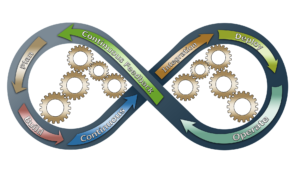
05 / Work with your existing context
Your application, team capacity and existing environment should guide the approach. Begin with the delivery problem, then decide which changes are worth making.
Kaali Digital’s broader technology services include AI and machine learning, data science and IoT solutions. Delivery and operational requirements can be discussed alongside the application itself.
Keep success measurable.
Agree a baseline for the issue you want to improve, such as release effort, failed changes or time spent investigating an incident.
06 / From review to improvement
A structured approach helps your team understand what will change, why it matters and how the result will be checked.
01 / REVIEW
Walk through the application, environments and release process. Identify constraints, recurring problems and existing ownership.
02 / PRIORITISE
Choose the improvements that address the clearest need. Define deliverables, access requirements and how success will be evaluated.
03 / IMPLEMENT
Make the agreed changes and test the workflow in an appropriate environment. Document the steps and review how failures are handled.
04 / REFINE
Review the results with your team, clarify ongoing ownership and agree any monitoring, maintenance or follow-up work.
07 / Frequently asked questions
Bring your current challenges. A description of the release process is enough to start a useful conversation.
DevOps services help improve how software is built, released and operated. Work can include automating delivery steps, managing infrastructure configuration, improving monitoring and clarifying responsibilities between development and operations.
A CI/CD pipeline is a repeatable workflow for integrating code, running checks and preparing or deploying a release. The exact stages depend on the application. Continuous delivery can retain a manual approval before production; it does not require every change to go live automatically.
That can be a sensible starting point. Review the current application, tools and release process first, then identify specific changes that address the problem. Whether an existing component can be retained depends on its capabilities and the project requirements.
It expresses infrastructure configuration in files that can be tracked and reviewed. This can make changes easier to understand and repeat, but the configuration still needs appropriate testing, access controls and maintenance.
No process can guarantee that every release succeeds or that a service never fails. Automation, checks and monitoring can help manage risk, while recovery planning helps the team respond. The approach should reflect the application’s requirements and acceptable level of disruption.
Scope, application complexity, current automation, access requirements and integration work all affect the estimate. A focused pipeline improvement has different needs from a broader environment redesign. Share your priorities and current setup so a realistic first phase can be discussed.
Agree ownership before handover. Your team should know how the workflow operates, where documentation lives and who handles updates or incidents. Any ongoing support, coverage hours and response expectations should be included explicitly in the agreed scope.
Let’s make the next release easier
Tell us how your team delivers software today, where it gets difficult and what you want to improve. We can discuss a practical starting point.
Explore more: AI & ML ↗ · IoT ↗ · All Services ↗